5 Hidden Hormone Disruptors in Everyday Skincare
Mar 10, 2026By Michelle Pfile | Hormone Health Educator & Advocate for Endocrine-Safe Wellness in Canada
The skincare conversation most women aren’t having
When women begin learning about hormone health, the first place they usually look is nutrition.
Protein.
Blood sugar.
Supplements.
But one area that often surprises people is skincare.
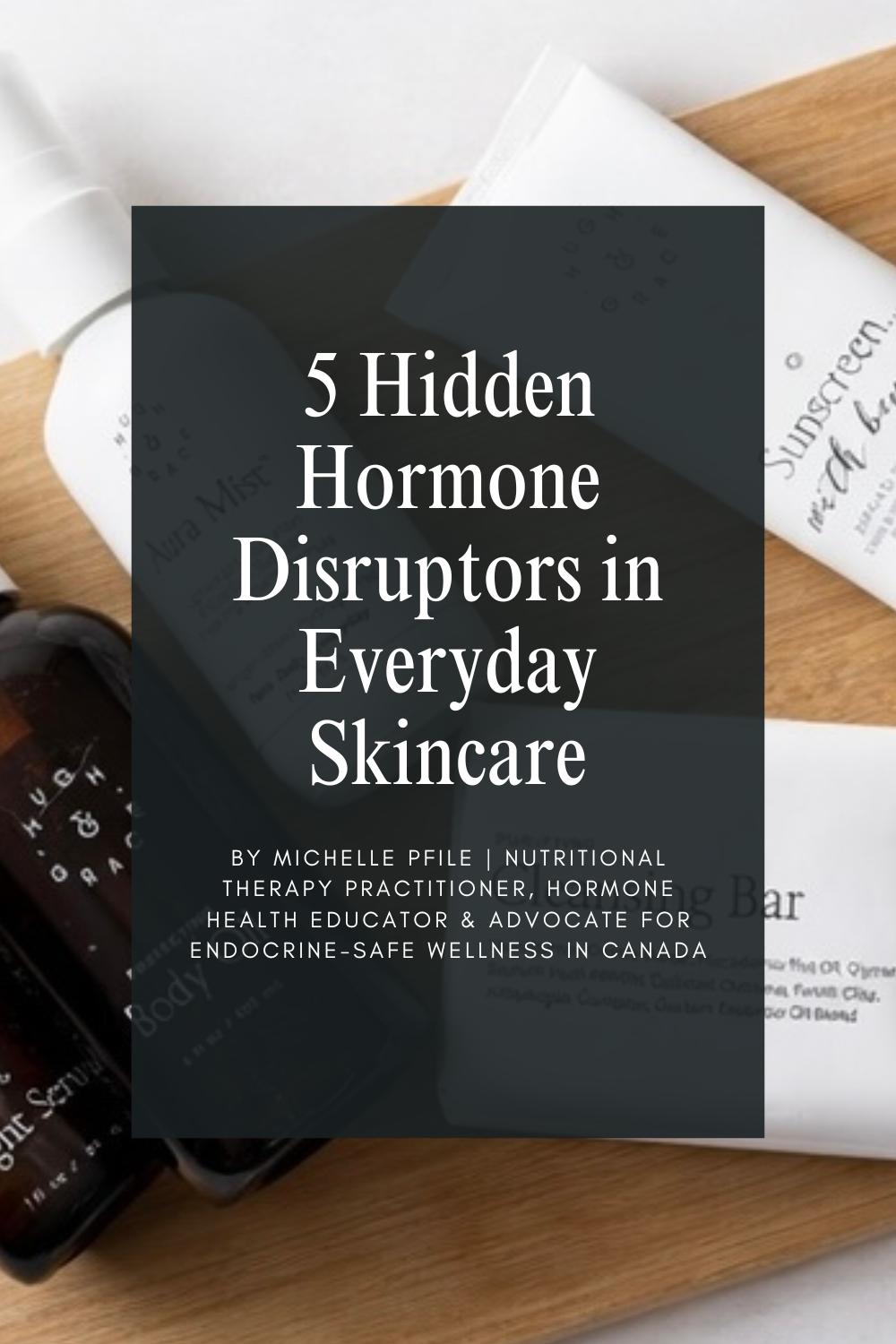
Our skin is our largest organ, and what we apply to it can be absorbed into the body.
Many common personal care products contain ingredients known as endocrine disrupting chemicals (EDCs).
These ingredients can mimic hormones, block hormone receptors, or interfere with hormone signaling.
This doesn’t mean we need to panic or throw everything away overnight.
But awareness matters — especially for women navigating perimenopause, fertility, or hormone imbalances.
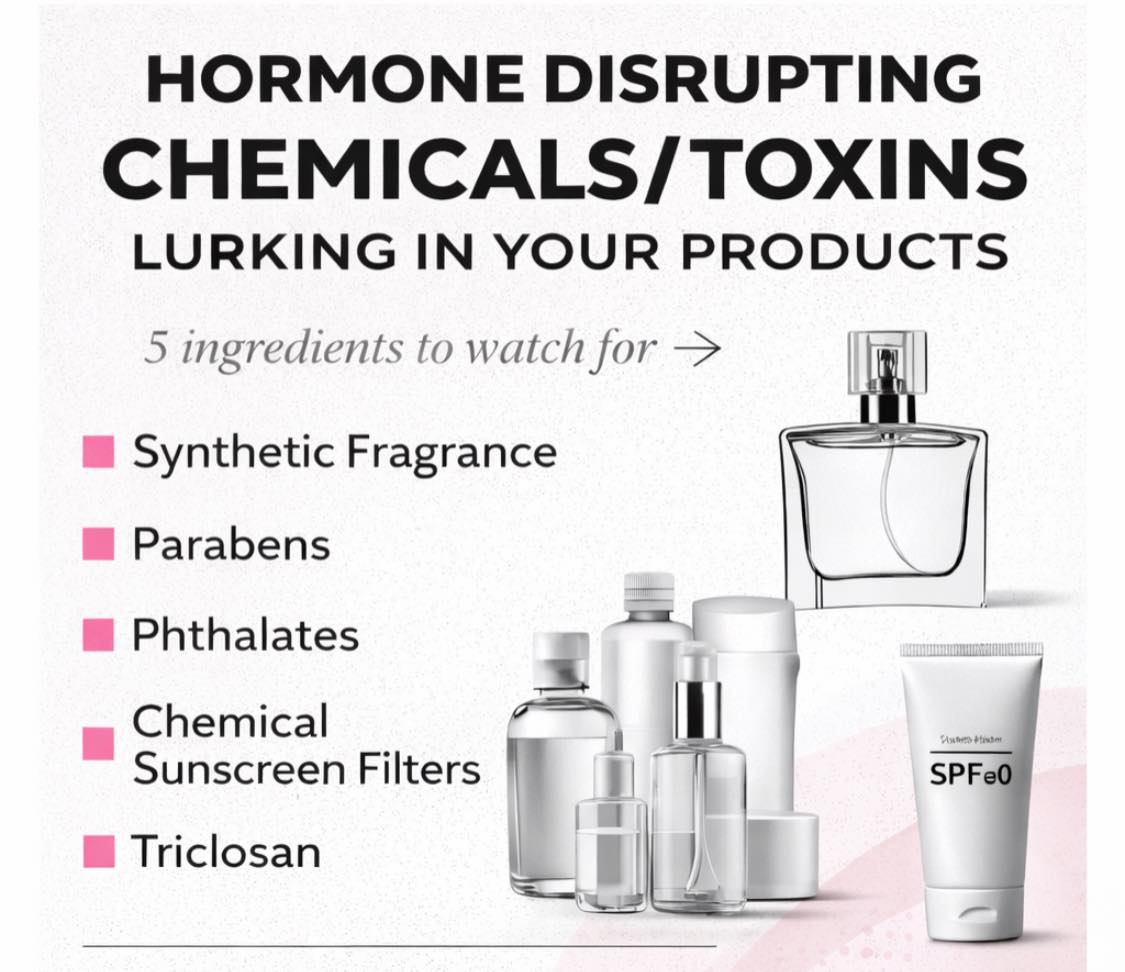
Here are five ingredients worth learning about.
1. Synthetic Fragrance
One of the most common ingredients in personal care products is simply listed as:
Fragrance
What most people don’t realize is that fragrance can contain dozens or even hundreds of undisclosed chemicals.
Some of these chemicals are linked to:
• hormone disruption
• allergic reactions
• respiratory irritation
Because fragrance formulas are considered trade secrets, companies are not required to disclose the individual ingredients.
This is why many hormone-conscious consumers choose products labeled fragrance-free or naturally scented.
2. Parabens
Parabens are preservatives used to extend shelf life in cosmetics and skincare.
You’ll often see them listed as:
• methylparaben
• propylparaben
• butylparaben
Parabens can mimic estrogen in the body, which is why they’ve raised concerns in hormone research.
Many modern skincare brands have moved away from parabens, but they still appear in many conventional products.
3. Phthalates
Phthalates are often used to stabilize fragrance and make scents last longer.
Research has linked certain phthalates to hormone disruption and reproductive concerns.
They’re rarely listed directly on labels because they often hide under the general term fragrance.
4. Triclosan
Triclosan was historically used as an antibacterial ingredient in soaps and personal care products.
Studies have shown it may interfere with thyroid hormone regulation.
While it has been restricted in some products, it can still appear in certain formulations.
5. Chemical Sunscreen Filters
Some chemical sunscreen ingredients have raised concerns because they can be absorbed into the bloodstream.
Examples include:
• oxybenzone
• octinoxate
Many people are now choosing mineral sunscreens that use ingredients like zinc oxide instead.
Why this matters for women after 40
During perimenopause and menopause, our hormonal systems are already shifting.
Reducing unnecessary exposure to endocrine disruptors can be one simple way to support overall hormone health.
For many women, the goal isn’t perfection.
It’s simply making more informed choices over time.
Swapping a few everyday products can significantly reduce the chemical load we bring into our homes.
A growing movement toward safer products
Over the past several years I’ve become passionate about helping women understand how everyday products impact hormone health.
This includes not only nutrition and supplements, but also skincare and household products.
Many women are surprised to discover that cleaner, hormone-safe products can also be incredibly effective.
And once you start learning about these ingredients, it becomes much easier to make simple swaps that support both your health and your home.
Want to learn more about hormone health?
If you're curious about how nutrition, lifestyle, and everyday products influence hormones after 40, you can start here.